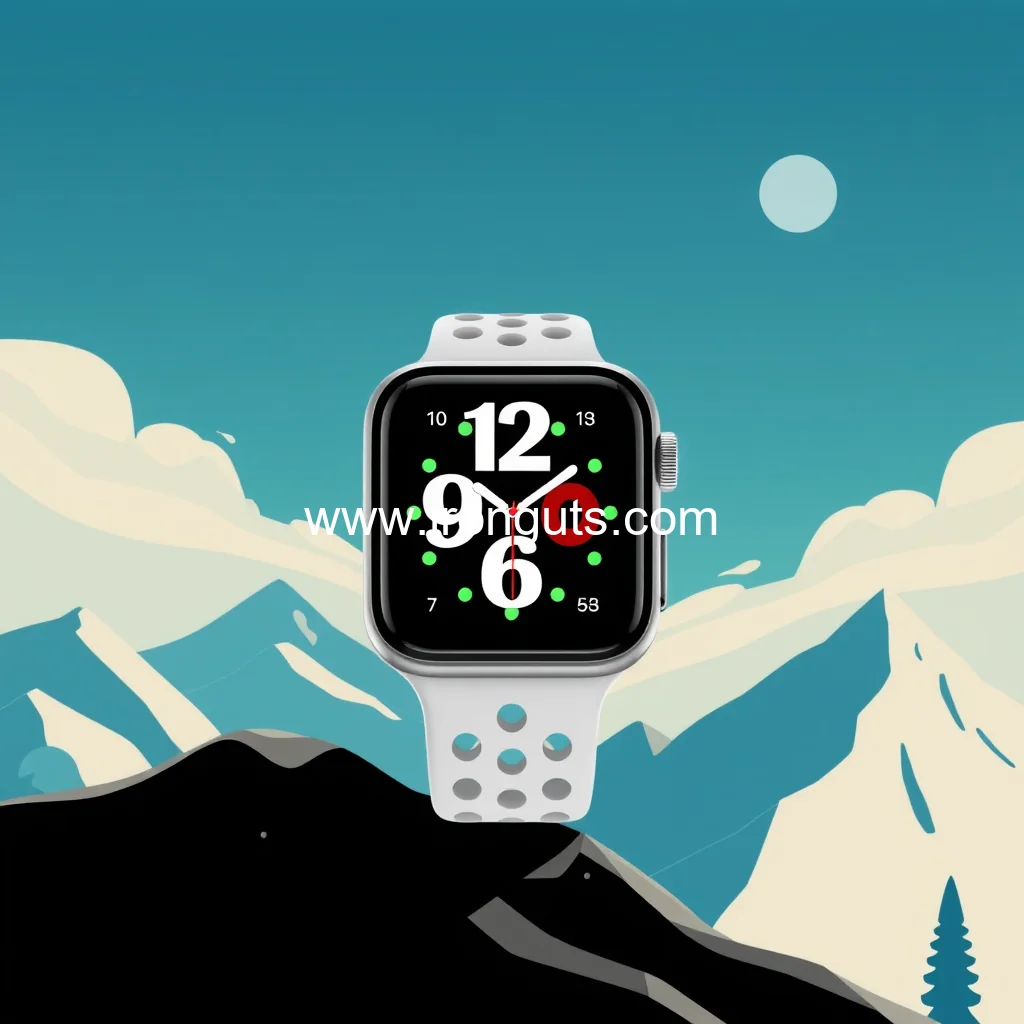
The Apple Watch Series 7 is a great tool to help me achieve my fitness goals.
The Importance of Monitoring Fitness Levels
Monitoring fitness levels is crucial for maintaining a healthy lifestyle. Regular exercise and a balanced diet are essential for overall well-being, but it’s easy to fall into a rut and neglect our physical health. The Apple Watch Series 7 helps to combat this by providing a convenient and accessible way to track fitness levels.
How the Apple Watch Series 7 Tracks Fitness Levels
The Apple Watch Series 7 uses a combination of built-in sensors and machine learning algorithms to track fitness levels. The watch includes a built-in accelerometer, gyroscope, and heart rate monitor, which work together to track movement, exercise, and other physical activities. The watch also uses machine learning algorithms to analyze data and provide personalized recommendations for improvement.
“But I still want to be able to do a plank in 60 seconds and run a 5K without getting winded.”
The Evolution of Fitness Goals
As we age, our bodies undergo significant changes that can impact our fitness goals. Hormonal fluctuations, reduced muscle mass, and decreased metabolism can make it challenging to achieve the same level of physical fitness as we did in our younger years.
This is a significant milestone for the Apple Watch, marking the first time a wearable device has been cleared by the FDA for the detection of sleep apnea.
The Apple Watch’s Health-Focused Features
The Apple Watch has long been a leader in health and fitness tracking, with a wide range of features that cater to various aspects of a user’s well-being.
I have been using a heart rate monitor to track my workouts and monitor my progress.
The Power of Heart Rate Zone Views
Heart rate zone views have revolutionized the way I approach my workouts. By providing a visual representation of my heart rate, I can see exactly where I am in my fitness journey. This has allowed me to make data-driven decisions about my training, ensuring that I’m challenging myself in the right way.
How Heart Rate Zone Views Work
A heart rate monitor measures my heart rate in real-time, allowing me to see my heart rate zone at any given moment. The monitor displays my heart rate in beats per minute (bpm), and often includes a color-coded system to indicate my zone. For example, a green zone might indicate a low-intensity workout, while a red zone might indicate a high-intensity workout. The heart rate zones are typically divided into five categories:
- Zone 1: 50-60% of maximum heart rate (MHR)
- Zone 2: 60-70% of MHR
- Zone 3: 70-80% of MHR
- Zone 4: 80-90% of MHR
- Zone 5: 90-100% of MHR
Understanding the Heart Rate Zones
The Apple Watch uses a system of five heart rate zones to categorize your heart rate data. These zones are based on the American Heart Association’s guidelines for exercise intensity. The zones are:
How the Apple Watch Tracks Heart Rate
The Apple Watch uses a combination of sensors to track your heart rate. The watch includes a built-in electrocardiogram (ECG) sensor, which measures the electrical activity of your heart. The watch also includes a photoplethysmography (PPG) sensor, which measures the changes in blood flow in your wrist.
Enabling Heart Rate Zones
To enable heart rate zones on your Apple Watch, you need to go to the Workout app and select the type of workout you are doing. The Apple Watch will then automatically categorize your heart rate data into one of the five zones. However, this feature is not enabled for all workout types.
Customizing Heart Rate Zones
While the Apple Watch can automatically categorize your heart rate data into the five zones, you can also customize the zones to suit your needs.
This feature is useful for athletes and fitness enthusiasts who want to monitor their progress and optimize their workouts.
Enabling Heart Rate Zone Views on Apple Watch
To access the heart rate zone views on your Apple Watch, follow these steps:
Once you’ve enabled heart rate zone views, you can use the Apple Watch to monitor your heart rate in real-time during your workouts. Here’s how:
Using the Apple Watch Crown
When you’re mid-workout, you can turn the crown on your Apple Watch to see what heart rate zone you’re in. For example, let’s say you’re running a 5K and you want to know if you’re in the correct heart rate zone to achieve your goal. You can turn the crown on your Apple Watch and see if your heart rate is within the optimal range for your intensity level.
Using the Apple Watch App
Alternatively, you can use the Apple Watch app on your iPhone to view your heart rate zone data.
Understanding Heart Rate Zones
Heart rate zones are a crucial aspect of fitness tracking, as they provide a way to monitor and optimize physical activity. The Apple Watch uses a combination of algorithms and historical data to determine the user’s optimal heart rate zones.
How the Apple Watch Calculates Heart Rate Zones
The Apple Watch calculates heart rate zones based on the user’s past activity data. This data is collected through the watch’s built-in heart rate sensor, which continuously monitors the user’s heart rate throughout the day. The watch then uses this data to create a personalized heart rate zone profile, which is updated on a monthly basis. The Apple Watch uses a proprietary algorithm to analyze the user’s heart rate data and determine their optimal heart rate zones. The algorithm takes into account factors such as the user’s age, sex, and fitness level to create a customized heart rate zone profile. The watch also uses data from other sources, such as the user’s workout history and activity levels, to refine the heart rate zone profile.
Adjusting Heart Rate Zones Manually
While the Apple Watch calculates heart rate zones based on past data, users can also adjust the zones manually. This allows users to customize their heart rate zone profile to suit their individual needs and preferences. To adjust the heart rate zones manually, users can go to the Apple Watch app on their iPhone and navigate to the “Workouts” section.
High-Intensity Interval Training (HIIT) Workouts
High-Intensity Interval Training (HIIT) workouts are a great way to boost your fitness level and burn calories. HIIT involves short bursts of high-intensity exercise followed by brief periods of rest. This type of training has been shown to be effective in improving cardiovascular health, increasing muscle strength, and enhancing endurance. Here are some benefits of HIIT workouts:
How to Incorporate HIIT Workouts into Your Routine
Incorporating HIIT workouts into your routine can be easy and convenient.
Your Cardio Fitness Score Reveals Your Heart’s Health and Fitness Levels.
Understanding Your Cardio Fitness Score
The cardio fitness score is a measure of your body’s ability to transport oxygen to your muscles during exercise. It’s a key indicator of cardiovascular health and is closely linked to overall fitness levels. The score is calculated based on your heart rate data and motion data, which are collected by the Apple Watch over time.
How the Score is Calculated
The calculation of the cardio fitness score is a complex process that involves several factors.
For strength training, you can also set a target intensity level for each exercise.
Introduction
The latest update to the Apple Watch, WatchOS 11, has brought several exciting features that enhance the user experience. One of the most notable additions is the Training Load feature, which provides a new way to track and analyze your workouts.
How Training Load Works
Training Load is a metric that measures the intensity of your workouts based on your heart rate, GPS data, and other factors. It’s calculated by comparing your workout to the average intensity of your past 28 days. This allows you to see how your current workout ranks in terms of intensity compared to your previous sessions. Key benefits of Training Load include: + Provides a more accurate picture of your workout intensity + Helps you identify areas for improvement + Offers a new way to track and analyze your progress
Manual Entry for Strength Training
While Training Load can automatically track workouts for cardio exercises, it doesn’t work the same way for strength training exercises like Pilates. To manually enter strength training exercises, you can use the Apple Watch app on your iPhone.
“Success is not a destination, it’s a journey. It’s about the process, not the outcome.”
The Power of Mindset in Achieving Success
In today’s fast-paced world, the concept of success has become increasingly complex. With the rise of social media, the pressure to achieve perfection has never been greater. However, what if I told you that the key to achieving success lies not in the destination, but in the journey itself? Vanessa Hand Orellana, a renowned expert in personal development, shares her insights on the power of mindset in achieving success.
The Limitations of Traditional Success Metrics
Traditional measures of success, such as wealth, status, and material possessions, have been shown to be inadequate in predicting long-term fulfillment. Research has consistently demonstrated that once basic needs are met, additional wealth and material possessions do not necessarily lead to greater happiness. In fact, studies have found that people who prioritize experiences over possessions tend to be happier and more satisfied with their lives. Some of the limitations of traditional success metrics include:
The Power of Mindset
So, what is the alternative to traditional success metrics? Vanessa Hand Orellana suggests that the key to achieving success lies in cultivating a positive and growth-oriented mindset.