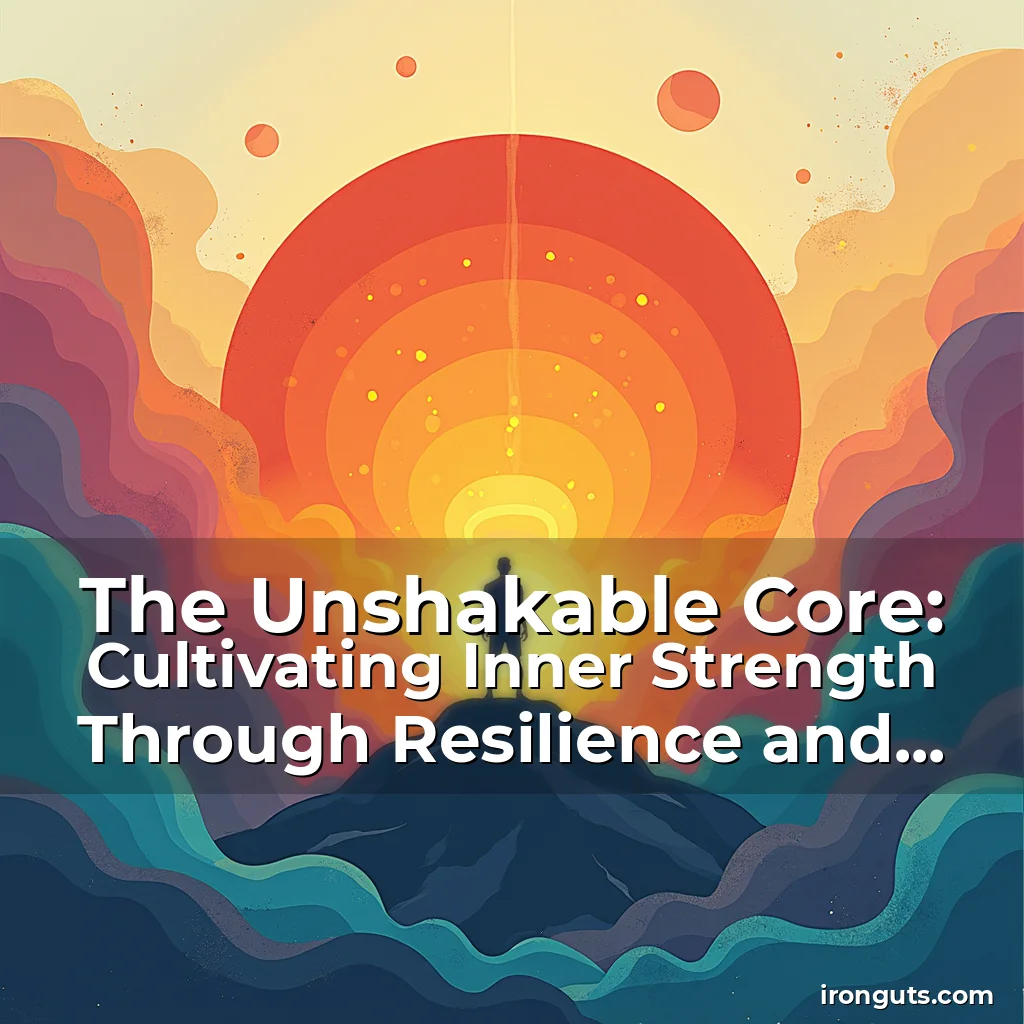
The Unshakable Core: Cultivating Inner Strength Through Resilience and Self-Mastery
In an era defined by uncertainty and rapid change, inner strength has emerged as the most vital asset for personal growth and success. This isn’t merely about enduring hardship—it’s about developing a deep-rooted resilience that transforms challenges into opportunities for evolution.
At its core, inner strength is the silent force that enables individuals to navigate life’s turbulence while maintaining their values, purpose, and emotional equilibrium. It represents the intersection of psychological fortitude, physical discipline, and mental clarity—a triad that empowers people to thrive rather than simply survive.
The Science Behind Inner Strength Development
Modern neuroscience reveals fascinating insights about how our brains adapt through adversity. When faced with stressors, the prefrontal cortex—the brain’s executive center—engages in complex problem-solving processes that strengthen neural pathways over time.
This neuroplasticity means that consistent exposure to manageable challenges actually rewires our cognitive architecture. As we repeatedly confront difficulties and find solutions, new synaptic connections form that enhance decision-making capabilities and emotional regulation skills.
Neurochemical responses:
- Cortisol levels decrease when we develop effective coping mechanisms
- Dopamine production increases through mastery experiences
- Serotonin receptors become more responsive with regular mindfulness practice
Practical applications of these findings include structured stress management programs and targeted skill-building activities designed to create controlled challenge environments. These methods help build psychological endurance without overwhelming the individual.
Building Mental Fortitude Through Daily Practices
Mental toughness isn’t something you’re born with; it’s forged through deliberate daily habits. Incorporating simple yet powerful routines can significantly boost your capacity to handle pressure and maintain focus under duress.
Mindfulness meditation is particularly effective in cultivating present-moment awareness. By training the mind to observe thoughts without judgment, practitioners develop greater control over emotional reactions and reduce automatic negative thinking patterns.
Research from Harvard Medical School shows that even eight weeks of regular meditation can increase gray matter density in areas associated with learning, memory, emotion regulation, and empathy.
Physical exercise also plays a crucial role in strengthening mental resilience. Aerobic activity stimulates the release of endorphins which naturally elevate mood and improve sleep quality. Combining cardiovascular workouts with strength training creates a synergistic effect on both body and mind.
Fostering Emotional Intelligence for Lasting Strength
Emotional intelligence forms the foundation of true inner strength. Understanding and managing emotions effectively allows individuals to respond thoughtfully rather than react impulsively during challenging situations.
The ability to recognize emotional triggers and regulate responses is essential for building psychological resilience. This involves developing self-awareness about what causes distress and creating personalized strategies for coping with those feelings constructively.
A key component of emotional intelligence is empathy—the capacity to understand others’ perspectives. Practicing active listening and perspective-taking enhances social connections and builds supportive networks that reinforce personal resilience.
Navigating Adversity with Strategic Thinking
True inner strength lies not in avoiding difficulty but in approaching it with strategic mindset. Developing frameworks for problem-solving helps transform obstacles into stepping stones for growth.
One effective approach is the S.M.A.R.T. goal-setting methodology. Setting Specific, Measurable, Achievable, Relevant, and Time-bound objectives provides clear direction and measurable progress indicators that bolster confidence.
Cognitive reframing techniques allow individuals to reinterpret setbacks as temporary challenges rather than insurmountable barriers. This shift in perception changes the emotional impact of difficult circumstances, making them more manageable.
Keeping a journal to document lessons learned from each experience reinforces this process. Writing down reflections helps identify patterns and track personal development over time.
Developing Physical Resilience as a Foundation
Physical health serves as the bedrock upon which mental and emotional strength are built. A strong, well-conditioned body supports cognitive function, energy levels, and overall vitality necessary for sustained effort towards goals.
Regular movement is essential for maintaining physiological resilience. Exercise improves circulation, strengthens muscles, and releases hormones that support brain health and mood stability. Even small amounts of daily activity contribute meaningfully to long-term wellness.
Nutrition plays an equally critical role in supporting bodily functions related to stress response and recovery. Consuming whole foods rich in antioxidants, omega-3 fatty acids, and other essential nutrients optimizes cellular performance across systems.
Quality sleep cannot be overstated in its importance. During restorative slumber, the body repairs tissues, consolidates memories, and regulates hormonal balances—all essential components of physical and mental resilience.
Cultivating a Supportive Environment for Growth
No one develops inner strength in isolation. Surrounding oneself with positive influences and constructive relationships accelerates personal development and provides necessary encouragement during tough times.
Selecting mentors who embody the qualities you wish to cultivate offers invaluable guidance. Their lived experiences provide practical wisdom that complements theoretical knowledge gained through study and reflection.
Creating accountability partnerships ensures consistency in habit formation. Sharing progress and setbacks with trusted peers fosters motivation and maintains commitment to personal improvement journeys.
Belonging to communities aligned with your values creates safe spaces for vulnerability and mutual support. Group dynamics often spark ideas and approaches that would remain undiscovered working alone.
Overcoming Limiting Beliefs About Capability
Many obstacles to developing inner strength stem from deeply ingrained limiting beliefs about our own abilities. Recognizing and challenging these internal constraints is crucial for unlocking full potential.
Self-limiting narratives often originate from past experiences where failure was perceived as definitive proof of inadequacy. Re-evaluating such stories with objective evidence weakens their power to constrain future possibilities.
Reframing failures as data points rather than verdicts shifts perspective dramatically. Each setback becomes an opportunity to refine approaches rather than confirm inherent limitations.
Consistently replacing negative affirmations with empowering ones reshapes subconscious programming over time. Affirmations must be specific, believable, and focused on desired outcomes rather than vague generalities.
Measuring Progress Toward Inner Strength
Evaluating growth in inner strength requires intentional tracking beyond subjective impressions. Establishing quantifiable metrics helps identify areas needing attention and celebrate meaningful achievements.
Journal entries documenting emotional responses to various situations reveal patterns over time. Tracking frequency of negative vs. positive reactions indicates progress toward improved emotional regulation.
Assessing consistency in daily practices provides insight into commitment levels. Monitoring workout logs, meditation durations, and reading comprehension improvements offers tangible measures of dedication.
Setting periodic milestones with specific benchmarks allows for structured evaluation. Reviewing accomplishments against original goals clarifies whether current efforts align with intended outcomes.
Conclusion
Inner strength emerges not from innate characteristics but through conscious cultivation of resilience across multiple dimensions of being. It requires integrating mental, emotional, and physical disciplines into cohesive lifestyle choices.
To begin your journey toward unshakeable core strength, commit to one daily practice today—whether it’s five minutes of meditation, a brief walk, or writing down three things you’re grateful for. Consistency will forge the path forward as you gradually build the fortress within.