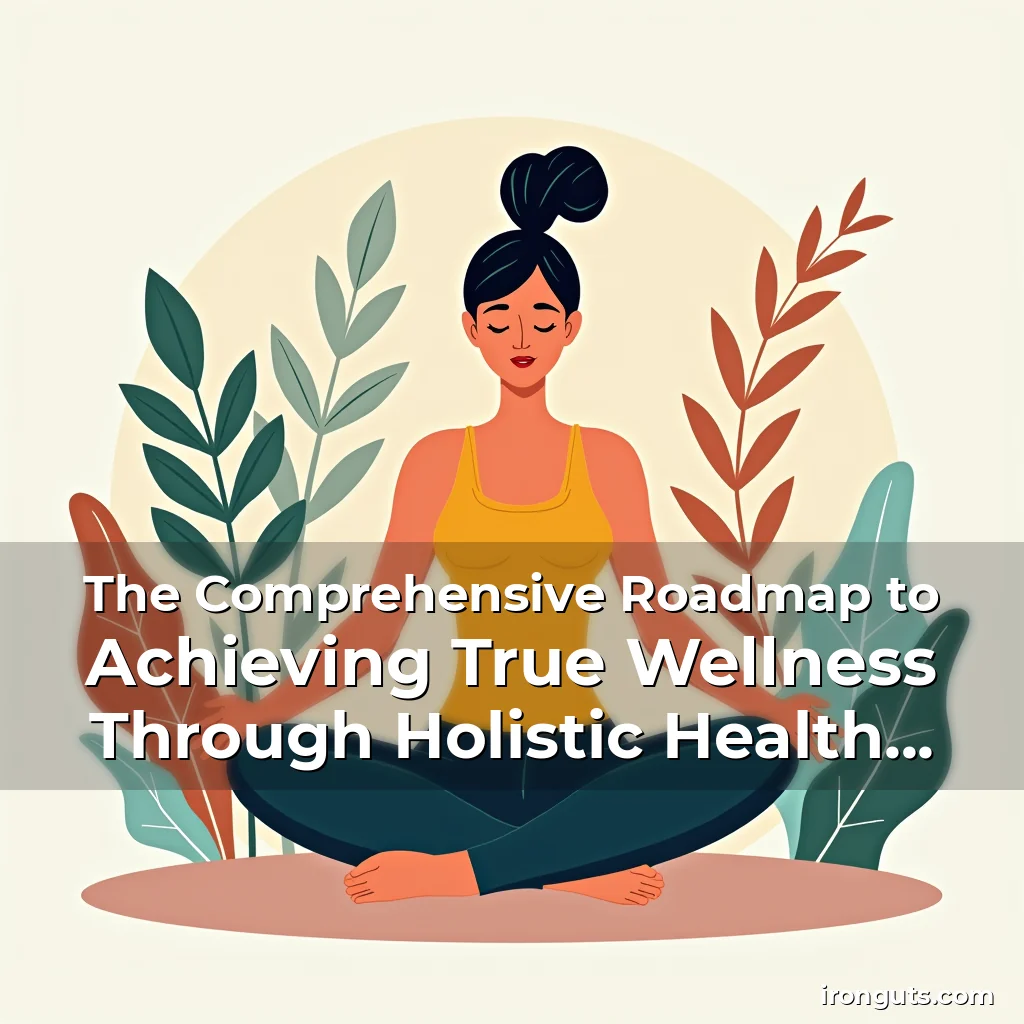
The Comprehensive Roadmap to Achieving True Wellness Through Holistic Health Practices
In an era where modern medicine often prioritizes symptom suppression over root cause resolution, holistic health emerges as a powerful alternative approach centered around treating the whole person—mind, body, and spirit. This integrative philosophy recognizes that true wellness cannot be achieved by addressing isolated parts but requires harmonizing every aspect of human existence.
Holistic health encompasses diverse practices ranging from nutrition and exercise to mental well-being and spiritual connection. It challenges conventional medical paradigms by emphasizing prevention rather than treatment alone, offering individuals tools to cultivate enduring vitality through balanced lifestyle choices.
Fundamental Principles Underpinning Holistic Health
The cornerstone of holistic health lies in its core belief that physical symptoms are manifestations of deeper imbalances within the mind-body-spirit triad. Unlike traditional approaches that isolate individual ailments, this perspective seeks to uncover interrelated factors contributing to poor health outcomes.
This paradigm shift encourages practitioners to examine environmental influences, emotional states, nutritional intake, and energetic fields simultaneously when diagnosing conditions. By considering these interconnected dimensions, holistic care aims to restore equilibrium at both micro and macro levels of physiological function.
A key principle emphasizes the importance of personalized care plans tailored specifically to each individual’s unique constitution and life circumstances. What works wonders for one person may prove detrimental to another due to genetic predispositions or differing lifestyles.
Another foundational concept centers around empowerment—the idea that individuals must actively participate in their healing journey rather than passively receiving treatments. This self-responsibility fosters long-term sustainable changes essential for maintaining optimal health status.
- Nutritional Synergy: A fundamental pillar involves recognizing how different food groups interact synergistically within our bodies, creating biochemical reactions that either support or undermine overall wellness.
- Energetic Alignment: Many holistic traditions emphasize aligning one’s energy field with natural rhythms through practices like grounding techniques, chakra balancing, or Qi cultivation methods.
Integrating Mindfulness Into Daily Life
Mindfulness serves as a crucial bridge connecting conscious awareness with bodily functions, enabling individuals to better understand their internal landscapes. Simple yet profound practices such as mindful breathing can significantly enhance cognitive clarity and emotional regulation capabilities.
Implementing mindfulness rituals consistently helps build resilience against stress-induced illnesses while improving sleep quality and digestion processes. These benefits stem from enhanced parasympathetic nervous system activation during meditation sessions.
Research indicates that regular mindfulness practice reduces cortisol levels by up to 30%, demonstrating its efficacy in managing chronic stress disorders effectively. Incorporating even five minutes of focused attention daily yields measurable improvements in psychological well-being.
Creating dedicated spaces for reflection promotes intentional living, allowing individuals to make healthier decisions aligned with their personal values and goals. This spatial awareness supports behavioral modifications necessary for sustained transformation.
To maximize impact, mindfulness should be integrated across various domains including work environments, family interactions, and leisure activities. This multi-faceted engagement ensures consistent reinforcement of positive neural pathways associated with calmness and presence.
Nourishing the Body Through Whole Foods
The foundation of any holistic health strategy rests upon selecting nutrient-dense foods capable of fueling cellular regeneration and immune function optimization. Emphasizing unprocessed ingredients rich in vitamins, minerals, and antioxidants becomes paramount for achieving peak performance states.
Whole foods diets prioritize seasonal produce harvested at optimal ripeness, ensuring maximal retention of phytonutrients vital for metabolic efficiency. This contrasts sharply with industrialized food systems that strip away essential elements during processing stages.
Cultivating a relationship with local farmers enhances transparency regarding agricultural practices employed in growing edible plants and raising livestock sources. This direct connection reinforces ethical consumption patterns aligned with ecological sustainability principles.
Diversifying dietary intake according to ancestral eating patterns provides insight into nourishment strategies tested over millennia rather than relying solely on contemporary scientific consensus which occasionally proves flawed or incomplete.
By incorporating superfoods known for their potent bioactive compounds—including cacao, turmeric, seaweeds, and fermented products—individuals can strategically boost biological defenses against oxidative damage and inflammation.
Gastrointestinal health forms a critical component since approximately 80% of serotonin receptors reside in digestive tract tissues. Therefore, nurturing gut microbiota diversity through probiotic-rich fare plays an instrumental role in regulating mood stability and cognitive sharpness.
Physical Activity as a Cornerstone of Wellness
Regular movement constitutes one of the most effective interventions available for preventing degenerative diseases and enhancing longevity prospects. Engaging in varied exercises stimulates mitochondrial biogenesis and improves cardiovascular endurance across age groups.
Yoga exemplifies an ideal form of activity integrating strength training, flexibility development, and breath control mechanisms simultaneously. Its meditative aspects further contribute to neuroplasticity enhancement through continuous sensory input processing.
High-intensity interval training (HIIT) offers time-efficient alternatives suitable for busy professionals seeking substantial fitness gains without excessive time commitments. However, proper warm-ups remain non-negotiable prerequisites before initiating such rigorous workouts.
Outdoor pursuits like hiking, swimming, or cycling not only promote physical conditioning but also facilitate reconnection with nature—an element increasingly absent from urban lifestyles dominated by screen-based entertainment options.
Adapting exercise routines based on individual needs prevents injuries while maximizing therapeutic potential derived from targeted muscle group engagement. Personal trainers specializing in functional movement analysis provide invaluable guidance towards injury-free progressions.
Tracking physiological responses through wearable technology enables data-driven adjustments optimizing workout regimens for maximum benefit realization. Heart rate variability monitoring particularly aids in determining appropriate exertion thresholds safely.
Balancing Emotional Wellbeing Through Self-Awareness
Emotional intelligence represents a transformative skill set empowering individuals to navigate complex interpersonal dynamics with greater ease and authenticity. Developing heightened self-awareness allows clearer identification of thought patterns influencing behavior choices.
Journaling acts as a gateway to introspection, revealing recurring themes that might otherwise go unnoticed amidst daily distractions. Regularly recording thoughts creates visible patterns aiding recognition of subconscious triggers affecting decision-making processes.
Practicing gratitude cultivates a mindset attuned to appreciating present moments rather than fixating exclusively on future uncertainties or past regrets. This shift in perception correlates strongly with increased happiness indicators measured objectively via longitudinal studies.
Engaging in creative outlets such as painting, music composition, or writing fiction channels excess emotions constructively instead of suppressing them until they manifest physically through illness episodes.
Social connections play an indispensable role in buffering against loneliness-related pathologies linked to premature mortality rates. Cultivating meaningful relationships through active listening skills strengthens communal bonds essential for collective thriving.
Professional counseling services offer structured frameworks for resolving deep-seated conflicts impeding personal growth trajectories. Therapeutic modalities vary widely depending on cultural backgrounds and preferred communication styles.
Tapping Into Spiritual Dimensions of Existence
Spirituality transcends religious affiliations encompassing myriad expressions aimed at discovering purpose beyond material concerns. Exploring existential questions regarding meaning, legacy, and cosmic interconnectedness enriches lived experiences profoundly.
Connecting with nature through forest bathing ceremonies, stargazing expeditions, or simply walking barefoot on soil activates primal instincts related to survival and belonging. Such encounters foster awe-inspiring realizations about humanity’s place within vast ecosystems.
Meditation practices rooted in ancient wisdom traditions teach observers to witness thoughts impartially without becoming entangled emotionally. This detachment facilitates clearer discernment distinguishing transient feelings from enduring truths.
Rituals involving fire, water, earth, or air symbolize cyclical transformations inherent in all living things. Participating in these symbolic acts instills appreciation for impermanence—a core tenet underlying many Eastern philosophies promoting equanimity amid change.
Engaging with sacred texts or philosophical discourses expands intellectual horizons exposing participants to diverse worldviews shaping global consciousness evolutionarily. Comparative analyses reveal common threads uniting disparate cultures under shared universal truths.
Vision quests undertaken solo or guided by experienced mentors challenge complacency encouraging bold leaps toward authentic self-discovery journeys. These rite-of-passage experiences often catalyze significant life transitions marked by newfound clarity and directionality.
Environmental Influences Shaping Overall Health Status
Our surroundings wield tremendous influence over physiological functioning despite being largely overlooked in mainstream healthcare models. Air quality degradation, electromagnetic pollution expo
Prioritizing clean drinking water access remains fundamental given that dehydration compromises organ systems responsible for detoxification and waste elimination. Installing filtration units removes harmful substances accumulating from municipal supplies affected by aging infrastructure issues.
Reducing indoor pollutant concentrations through strategic ventilation management decreases incidence of respiratory ailments commonly misdiagnosed as allergies or asthma flare-ups. Natural light exposure regulates circadian rhythms governing hormonal secretion cycles critically tied to metabolism regulation.
Choosing eco-friendly household products minimizes toxic load burdens placed upon liver enzymes tasked with metabolizing synthetic chemicals introduced inadvertently through routine domestic chores.
Urban dwellers benefit immensely from green space proximity facilitating stress reduction effects comparable to pharmaceutical interventions used conventionally for anxiety relief purposes. Parks serve dual roles acting as recreational areas and oxygen generators simultaneously.
Minimizing plastic usage curtails endocrine disruptor ingestion risks originating primarily from packaging materials leaching estrogen-mimicking compounds into foodstuffs stored improperly for extended durations.
Cultivating Resilience Against Modern Stressors
Chronic stress has become an epidemic condition eroding mental acuity and accelerating onset of autoimmune disorders previously considered rare afflictions limited mainly to elderly populations. Recognizing early warning signs becomes imperative for mitigating long-term complications arising from prolonged tension states.
Employing time-blocking methodologies optimizes productivity while preserving sufficient downtime required for recovery periods between high-stimulation tasks. Prioritization matrices help distinguish urgent matters requiring immediate action versus less pressing assignments deferred appropriately.
Learning assertive communication techniques prevents burnout caused by passive-aggressive workplace dynamics fostering resentment accumulation over months turning into full-blown meltdowns suddenly erupting unpredictably.
Establishing clear boundaries separates professional obligations from private spheres protecting mental reserves allocated for familial responsibilities and self-care necessities. Boundaries maintain healthy separations essential for sustaining emotional equilibrium.
Engaging in hobbies unrelated to career aspirations rejuvenates depleted energies replenishing creativity reservoirs tapped frequently during demanding projects. Diverse interests broaden perspectives expanding problem-solving repertoires applicable across multiple contexts.
Periodic digital detoxes recalibrate attention spans fragmented by constant notifications disrupting flow states conducive to deep concentration needed for mastering new competencies efficiently.
Community Engagement as Vital Component of Healing Processes
Strong social networks buffer against adverse health consequences stemming from isolation-induced depression syndromes prevalent among digitally connected yet socially disconnected demographics. Participation in local initiatives fosters sense of belonging reinforcing identity formation positively impacting psychological wellbeing metrics.
Volunteering opportunities create reciprocal exchange platforms benefiting both service recipients and providers alike through mutual enrichment experiences strengthening intrinsic motivation drivers behind altruistic actions taken voluntarily.
Attending wellness workshops exposes attendees to innovative solutions addressing niche problems encountered uniquely within specific communities experiencing similar challenges collectively. Peer-to-peer learning accelerates knowledge acquisition exponentially compared to solitary research endeavors.
Joining support groups composed of individuals facing analogous difficulties establishes safe havens where vulnerable disclosures occur freely without fear judgment thereby reducing stigma surrounding certain health conditions once deemed taboo subjects for discussion publicly.
Collaborative gardening projects encourage cooperative efforts yielding tangible results observable visually through flourishing plant life reflecting collective dedication invested successfully into communal undertakings.
Neighborhood watch programs enhance safety perceptions indirectly contributing to lower crime rates correlated with improved public health outcomes documented extensively in sociological literature analyzing neighborhood-level determinants affecting population-wide wellness trends.
Conclusion
Holistic health represents more than merely adopting alternative therapies; it signifies embracing a comprehensive worldview valuing integration above compartmentalization. This approach acknowledges intricate webbing linking seemingly disparate facets composing the human experience seamlessly.
True transformation occurs gradually through persistent commitment to cultivating harmony between inner selves and external realities continually adjusting course as circumstances evolve dynamically over time. The journey toward wholeness demands courage, patience, and unwavering faith in one’s innate capacity for self-healing.

news is a contributor at IronGuts. We are committed to providing well-researched, accurate, and valuable content to our readers.